
The Three Eyes: Instinct, Insight, and Influence
Standfirst: We restarted the Kubuntu Podcast on YouTube. The comments argued about AI. The numbers argued back.
When you work in open source long enough, you learn to trust three kinds of seeing.
Call them the three eyes: instinct, insight, and influence.
They do not always agree. Lately they have been arguing in public under our restarted Kubuntu Podcast videos.
Instinct
Instinct is fast. It is the gut read of a room.
We brought the Kubuntu Podcast back to YouTube. One of the first episodes used AI-assisted voice for the bulk of the narration. The close Kubuntu community noticed. Of course they did. We are a project that cares about craft, about human agency, about not sleepwalking into tools that flatten the work.
The comment thread filled up. Roughly twenty-two comments, split about half and half — warm on one side, sharply sceptical of AI on the other. In the rooms that matter to us most — Council chat, familiar faces, people who have shipped Kubuntu for years — the volume skewed toward the sceptical half.
The instinctive story wrote itself: people hate the AI voice, so the video must be bad.
That instinct is not stupid. It is protective. It is how communities keep their soul. It is also incomplete.
Insight
Insight is slower. It asks what actually happened, not what felt loudest.
Almost a thousand views. Engagement that would have been a stretch in quieter seasons of the show. And beyond the headline view count: every metric we track moved the right way — significantly, not marginally.
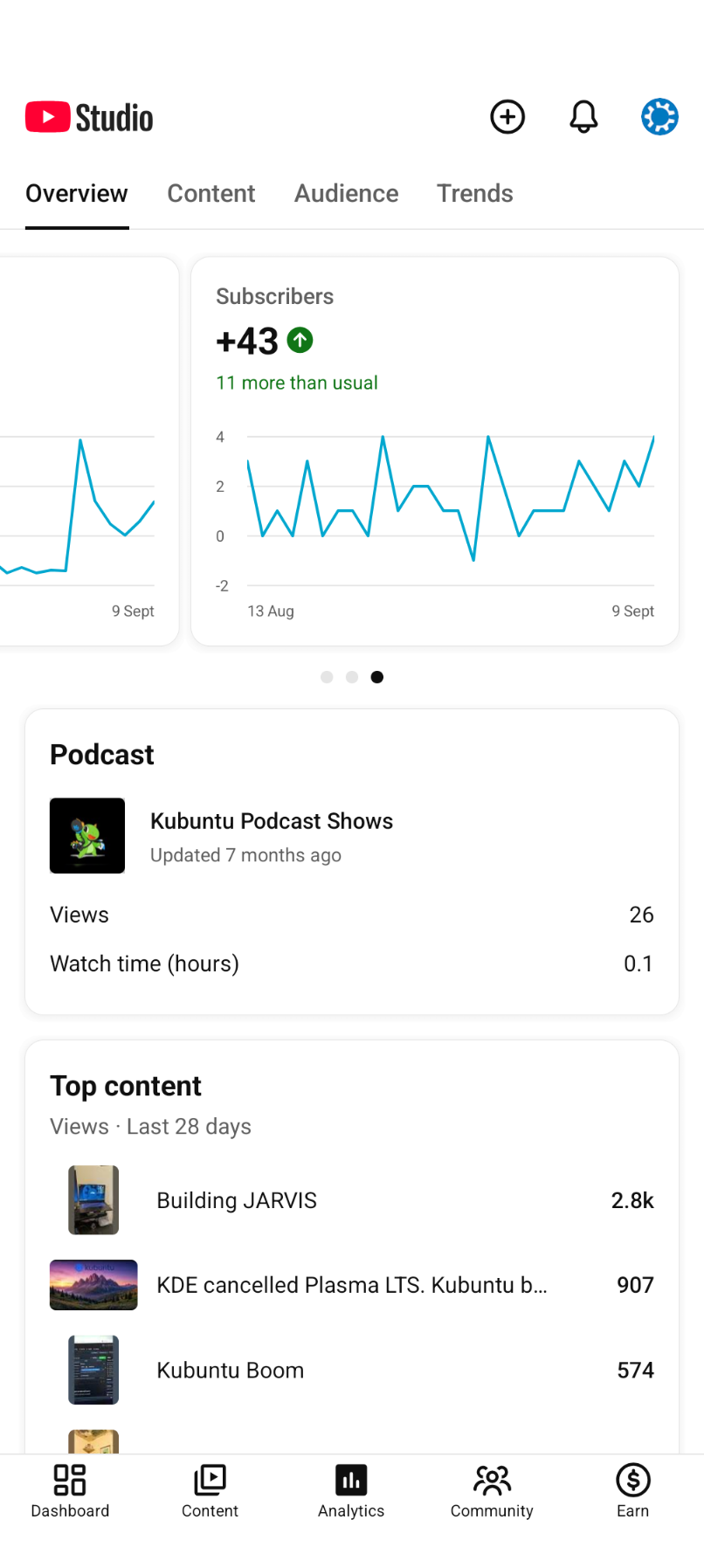
That is the awkward part for a story built only on instinct. A split comment section is not the same thing as a failed video. A cluster of negative comments about method is not the same thing as an audience walking away from message.
The data did not say “stop.” It said “you are being heard — including by people who disagree with how you made it.”
Those are different sentences. Conflating them is how projects talk themselves into retreat.
Influence
Influence is what happens when instinct and insight fight in public.
Here is the pattern, and it is not unique to Kubuntu, or to Linux, or to AI. A small number of negative voices ring loudly. A larger number of people watch, learn, click, share — and stay quiet. The silent majority does not leave a receipt in the comments. The critical minority does.
So the room sounds like the critics. The dashboard looks like growth. If you only listen to the room, you conclude the work failed. If you only look at the dashboard, you ignore real concerns about craft and trust. Both mistakes are expensive.
The influence problem is this: loud minority signal plus silent majority behaviour gets misread as consensus. Communities then optimise for the loudest discomfort instead of the clearest evidence — or, equally badly, dismiss all discomfort because the graphs are green.
Neither is leadership. Leadership holds both eyes open at once.
What we are doing with that
We are not pretending the AI-voice feedback was noise. It was not. Fair criticism landed, and it shaped how we think about the next episodes — including more human voice where it counts, and clearer honesty about where assistance helps us ship news alongside the distro itself.
We are also not treating a polarised comment thread as a veto on restarting a show that the numbers say people are watching again.
Instinct keeps us human. Insight keeps us honest. Influence is the responsibility that sits between them: do not let the loudest twenty-two comments rewrite the story of nearly a thousand views — and do not let nearly a thousand views deafen you to the twenty-two.
That is the three eyes. Use all of them.

Watch the episode: Kubuntu Podcast on YouTube.
Rick Timmis — Kubuntu Council.